
The ink on your graduation certificate is barely dry, and already the whispers of doubt begin. “Did I choose the right degree?” “What job can I even get with this?
Everyone else seems to have it figured out.” If this sounds familiar, you’re not alone. This gnawing uncertainty is the rite of passage for so many young professionals, a feeling amplified by the relentless pace of technological change.
We’re living in an era where the ground beneath our feet—the job market—shifts faster than ever before. Forget the idea of a single, linear career path; that’s a relic of the past.
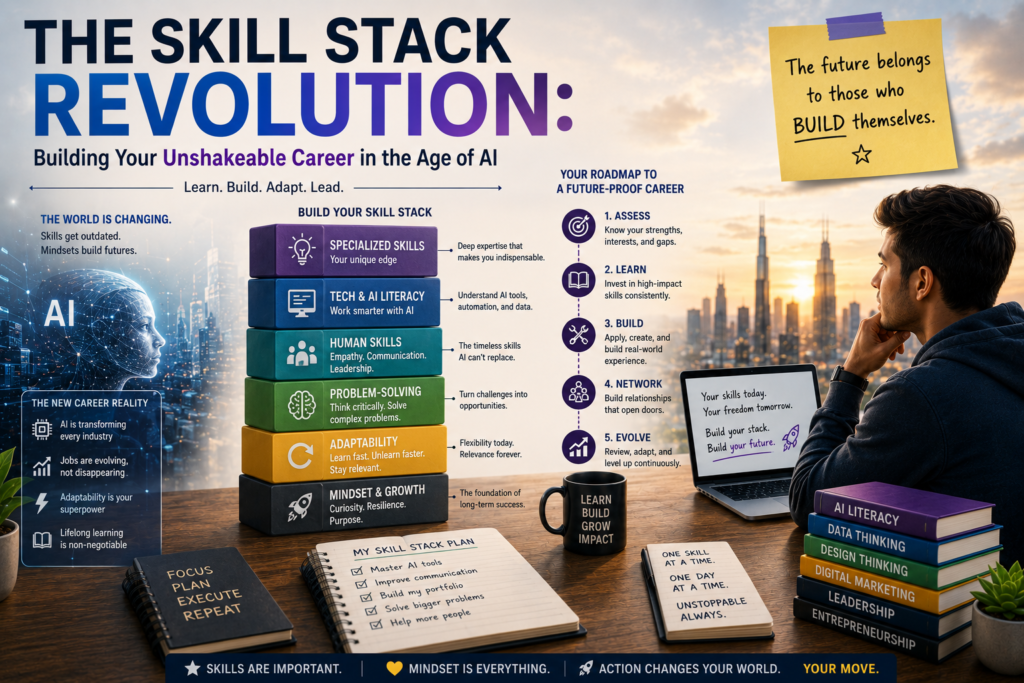
Today, it’s about building a dynamic “skill stack,” a multifaceted collection of abilities that makes you not just employable, but indispensable. This isn’t about chasing the latest buzzwords; it’s about strategic, long-term professional survival and growth.
From Silos to Synergy: Why Your Degree Isn’t Enough Anymore
For generations, the narrative was simple: get a degree, get a job in that field, climb the ladder, and enjoy a stable career. But the world has thrown a curveball. Automation,
AI, and global interconnectedness have fundamentally reshaped industries. What was once a specialized skill can become obsolete in a few years.
Think about it: how many people started their careers as dedicated “BlackBerry repair technicians” or “MySpace page designers”? These roles simply don’t exist in the same way, if at all.
This is where the concept of a “skill stack” comes in. Instead of relying on a single, broad qualification, your career is now built on a foundation of diverse, interconnected skills. It’s like building with LEGOs:
each brick is a different skill—technical, soft, creative, analytical—and you can combine them in countless ways to build unique solutions and career opportunities. This agility is crucial.
Deconstructing the Skill Stack: What Actually Matters?
So, what goes into this all-important skill stack? It’s a blend of hard skills and soft skills, often referred to as “power skills” now, because they power everything else.
The Technical Backbone (Hard Skills)
These are the tangible, teachable abilities that are often specific to a particular job or industry. They are the “what” you can do.
- Digital Literacy & Fluency: Beyond just using a computer, this means understanding cloud computing, cybersecurity basics, data analysis tools, project management software (like Asana or Trello), and common office suites.
- Coding & Programming Languages: Depending on your field, proficiency in languages like Python, JavaScript, SQL, or even specialized ones like R for data science, can be a massive differentiator.
- Data Analysis & Interpretation: The ability to collect, clean, analyze, and draw meaningful insights from data is becoming non-negotiable across almost all sectors. Tools like Excel, Tableau, or Power BI are valuable here.
- AI & Machine Learning Familiarity: You don’t necessarily need to be an AI developer, but understanding the principles, applications, and ethical implications of AI is increasingly important. Think prompt engineering, understanding AI-generated content, or how AI tools can enhance your specific role.
- Specialized Software & Tools: This could range from Adobe Creative Suite for designers, CAD software for engineers, or CRM systems for sales professionals.
The Human Edge (Soft Skills / Power Skills)
These are the interpersonal and cognitive abilities that allow you to work effectively with others and navigate complex situations. They are the “how” you do things.
- Critical Thinking & Problem-Solving: This is perhaps the most vital skill. It’s about analyzing information objectively, identifying root causes, and devising effective solutions—exactly what AI struggles to replicate holistically.
- Communication (Verbal & Written): Clear, concise, and compelling communication is key. This includes active listening, public speaking, and crafting persuasive written content.
- Adaptability & Resilience: The capacity to embrace change, learn new things quickly, and bounce back from setbacks is paramount in a rapidly evolving market.
- Collaboration & Teamwork: Most modern work involves some level of team effort. Being able to work harmoniously with diverse personalities and skill sets is essential.
- Emotional Intelligence (EQ): Understanding and managing your own emotions, as well as recognizing and influencing the emotions of others, fosters stronger relationships and better leadership.
- Creativity & Innovation: Thinking outside the box, generating new ideas, and approaching problems from novel angles—this is where human ingenuity truly shines.
- Time Management & Organization: Juggling multiple tasks, prioritizing effectively, and meeting deadlines are fundamental to productivity.
Building Your Stack: A Practical, No-Nonsense Approach
So, how do you actually build this skill stack? It’s not a one-time project; it’s an ongoing, evolving process.
1. Self-Assessment: What Do You Already Have?
Sit down and honestly assess your current skills. Look at your education, past work experiences (even internships or volunteer roles), and personal projects.
What are you good at? What do you enjoy doing? What feedback have you received? Don’t just think about job-specific skills; consider those transferable power skills too.
What makes you tick? What are your natural inclinations? Sometimes, understanding your inner compass is the first step in aligning it with your professional journey. Think about your intrinsic motivations and what truly energizes you.
2. Market Research: What’s Needed?
Now, look outwards. What industries are growing? What roles are in demand? What skills are employers consistently asking for in job descriptions related to your interests? LinkedIn, job boards, industry reports, and even casual conversations with people in your desired fields can provide invaluable insights.
Pay attention to recurring themes. Are they asking for data analysis skills across the board? Is AI proficiency a common requirement? This doesn’t mean you need to become an AI expert overnight, but understanding its integration is key.
3. Identify the Gaps and Synergies
Compare what you have with what’s needed. Where are the gaps? Crucially, look for synergies. Can you combine your existing knowledge in, say, marketing with a new skill in data analytics to become a highly effective digital marketing analyst?
Or can your passion for storytelling be amplified by learning video editing and content creation tools? This is where you start to craft your unique value proposition.
4. Strategic Learning: Upskill and Reskill
This is the action phase. Don’t wait for your employer to offer training (though take advantage if they do!).
- Online Courses: Platforms like Coursera, edX, Udemy, and LinkedIn Learning offer courses on virtually any skill imaginable, often at affordable prices or even for free.
- Bootcamps: For intensive, rapid skill acquisition in areas like coding or data science, bootcamps can be effective.
- Certifications: Industry-recognized certifications can validate your skills and make your resume stand out.
- Workshops & Webinars: These are great for targeted learning and staying updated on specific trends.
- Projects & Practice: The best way to learn is often by doing. Start personal projects, contribute to open-source initiatives, or volunteer your skills. Build a portfolio that showcases your abilities.
Remember, learning isn’t just about formal education. It’s about curiosity and continuous engagement with your field.
This is where exploring topics like finding peace and purpose in your inner world can be surprisingly relevant to career longevity; a balanced individual is often a more effective and adaptable professional.
5. Networking: Build Your Tribe
Your network is an extension of your skill stack. Connecting with peers, mentors, and industry professionals can open doors to opportunities, provide learning resources, and offer different perspectives.
Attend industry events (online and in-person), join professional groups, and engage in meaningful conversations. Networking isn’t just about asking for favors; it’s about building relationships based on mutual value.
Common Career Stumbles to Avoid
Even with the best intentions, many professionals trip up in predictable ways. Recognizing these pitfalls can save you years of frustration.
Myth 1: “My Degree Guarantees Success.”
A degree is a foundation, not a destination. The skills you acquire in university are important, but they are just the starting point. The market demands continuous learning and adaptation. Relying solely on your diploma is like trying to build a skyscraper with only the foundation laid.
Myth 2: “Loyalty to One Company Means Growth.”
While there’s value in commitment, staying too long in a role or company that offers no growth opportunities can lead to stagnation. Sometimes,
the biggest leaps in salary and skill development come from strategic moves to new environments. This doesn’t mean job-hopping constantly, but rather making informed decisions about when a change is necessary for your long-term trajectory. The idea of a “job for life” is largely gone.
Myth 3: “Passion is All You Need.”
Passion is a fantastic motivator, but it needs to be paired with practical skills and market demand. A brilliant but niche passion that nobody is willing to pay for won’t pay your bills.
The sweet spot is finding where your passions intersect with market needs and where you can develop the skills to meet those needs. This is where true career fulfillment and stability often lie.
Myth 4: “I’ll Learn When I Need To.”
Waiting until you absolutely *need* a new skill to learn it is a reactive, often desperate, approach. By then, it might be too late, or the learning curve will be steeper under pressure.
Proactive, continuous learning keeps you ahead of the curve, making you a valuable asset rather than someone scrambling to catch up. Think of it as regular maintenance for your career engine.
Myth 5: Comparing Your Career Journey to Others
Social media and even casual conversations often present curated highlights of other people’s careers. It’s easy to look at someone who seems to have it all figured out and feel inadequate.
Remember, everyone faces struggles, rejections, and moments of doubt. Focus on your own path, your own growth, and your own unique definition of success. What looks like an overnight success for someone else is often years of hard work, learning, and persistence that you don’t see.
The Long-Term Impact: Beyond the Paycheck
Building a robust skill stack isn’t just about landing a better job or a higher salary (though those are significant benefits). It has profound impacts on your overall well-being:
- Financial Stability: Adaptable, in-demand skills command higher compensation and offer more job security, leading to greater financial freedom and reduced stress.
- Career Resilience: When industries shift or automation impacts certain roles, individuals with diverse skill sets are better equipped to pivot and find new opportunities.
- Personal Growth & Fulfillment: Continuously learning and mastering new skills is inherently rewarding. It keeps your mind sharp, boosts your confidence, and can lead to more engaging and meaningful work.
- Lifestyle Flexibility: A strong skill stack can open doors to remote work, flexible hours, or even entrepreneurial ventures, allowing you to design a lifestyle that suits you.
The job market of 2025–2026 and beyond will continue to reward those who are proactive, adaptable, and committed to lifelong learning. It’s about building a career that’s not just a job, but a dynamic journey of continuous development and value creation.
Future Outlook: AI, Automation, and the Unshakeable Professional
The rise of AI and automation isn’t a doomsday prophecy for careers; it’s a catalyst for evolution. Roles that involve repetitive tasks will undoubtedly change or disappear.
However, jobs requiring complex problem-solving, creativity, critical thinking, emotional intelligence, and strategic decision-making will become even more valuable.
Your skill stack is your defense and your offense in this evolving landscape. It’s not about out-computing the machines, but about out-thinking, out-creating, and out-collaborating them. Focus on developing those uniquely human capabilities that AI cannot replicate.
Embrace technology as a tool to augment your abilities, not as a threat to your livelihood. The future belongs to the adaptable, the curious, and the continuously learning professional who understands that their career is a masterpiece they build, skill by skill, brick by brick. Your journey at Guidebloom can be a part of that continuous growth.
Frequently Asked Questions
Q1: I just graduated and have no idea what career path to choose. Where do I even start?
It’s perfectly normal to feel lost after graduation. Don’t pressure yourself to find “the one” perfect career immediately. Start by exploring your interests, the skills you enjoyed using in university, and what kind of work environment you might thrive in.
Take on internships or volunteer roles in different fields to get a feel for them. Focus on building transferable skills like communication, problem-solving, and adaptability.
These skills will serve you well no matter which path you ultimately choose. The key is to start learning and experiencing, rather than trying to map out the next 40 years.
Q2: How can I gain in-demand skills without going back to university for another degree?
You absolutely can. Online platforms like Coursera, edX, Udemy, and LinkedIn Learning offer a vast array of courses on everything from data science and digital marketing to project management and AI fundamentals. Look for certifications in your chosen field,
participate in bootcamps for intensive training, and most importantly, build a portfolio of projects that showcase your practical abilities. Practical experience, even from personal projects, often speaks louder than a degree alone.
Q3: I’m mid-career and feel like my skills are becoming outdated. What should I do?
This is a common concern, and the best approach is proactive learning. Identify the skills that are becoming essential in your industry.
Is it data analysis, cloud computing, specific software, or AI literacy? Then, dedicate time each week to learning. This could involve online courses, industry webinars, reading trade publications, or taking on new responsibilities at work that stretch your capabilities. Networking with peers who are ahead of the curve can also provide invaluable guidance and opportunities.
Q4: How important are “soft skills” really, especially when technical skills seem more critical?
Soft skills, or power skills as they’re increasingly called, are critically important—often more so than technical skills for long-term career advancement.
Technical skills might get you the interview, but your ability to communicate, collaborate, solve problems creatively, and adapt to change will determine your success and growth within a role and the company. In an era of increasing automation, these uniquely human skills are what set professionals apart.
Q5: Is it possible to build a diverse skill stack and still maintain a good work-life balance?
Yes, it is. It requires intentionality and prioritizing. Instead of trying to learn everything at once, focus on acquiring skills that are synergistic and relevant to your current or desired career path. Integrate learning into your routine rather than treating it as a separate, overwhelming task.
Many online learning resources are flexible, allowing you to learn at your own pace. Also, remember that continuous learning can actually *improve* work-life balance in the long run by making you more efficient, valuable, and potentially opening doors to roles with better flexibility.
Q6: How do I know if I’m learning the *right* skills for the future?
Stay informed about industry trends through reputable sources, attend webinars, and follow thought leaders in your field. Pay attention to job descriptions for roles you aspire to—what skills are consistently mentioned? Consider skills that enhance your core abilities rather than just chasing fads.
For instance, if you’re a writer, learning AI-powered content optimization tools or data analytics for audience understanding makes sense. If you’re in operations, understanding automation software is key. Focus on skills that increase your adaptability and problem-solving capacity.
Q7: What’s the difference between a “skill stack” and just having a lot of skills?
A skill stack is more than just a random collection of skills. It’s a *strategic* and *integrated* combination of skills that, when combined, create unique value and make you particularly effective in a certain role or industry.
It’s about how your various skills complement and amplify each other, creating a synergy that makes you stand out. It’s the holistic picture of your capabilities, not just a list of individual talents.