
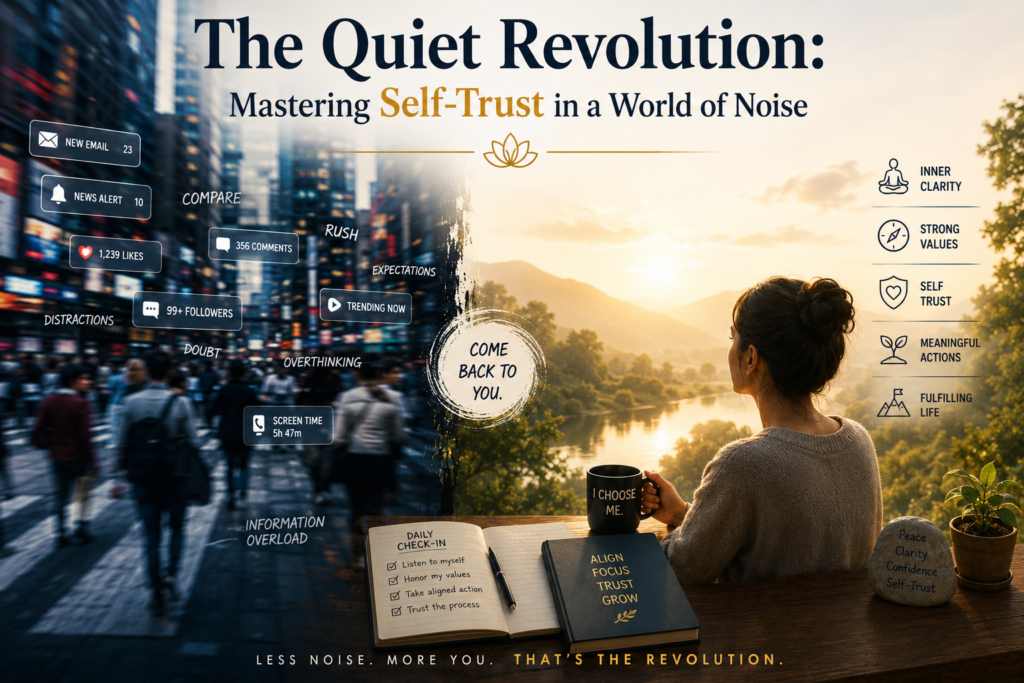
It was a Tuesday, much like any other. The sun was shining, emails were piling up, and the familiar hum of modern life buzzed in my ears. But inside, a different story unfolded. A quiet battle raged, a war I didn’t even realize I was fighting. It was the insidious erosion of self-trust.
I found myself questioning every decision, second-guessing every instinct. The voices of others, the constant barrage of opinions online, the subtle pressures of societal expectations – they all merged into a deafening chorus, drowning out the quiet voice within. I was living on autopilot, reacting to external stimuli, but losing touch with the core of who I was.
The Invisible Enemy: Why Self-Trust Gets Lost
Self-trust isn’t a grand, sweeping emotion. It’s more like the slow, steady accumulation of small, consistent actions and beliefs. But in today’s world, this delicate foundation is constantly under attack. Consider these factors:
- Information Overload: The internet offers endless opinions, advice, and “expert” guidance, making it difficult to discern your own truth.
- Comparison Culture: Social media showcases curated lives, breeding feelings of inadequacy and self-doubt. You start wondering, “Am I good enough? Doing enough?”
- Constant Criticism: From online trolls to casual critics, negativity is rampant. It becomes easy to internalize these voices and turn them against yourself.
- Fear of Failure: The pressure to succeed can paralyze you. You become afraid to take risks, to make mistakes, to trust your ability to navigate the unknown.
This is where growth feels slow, almost invisible. The damage happens subtly. A small voice in your head begins to whisper: “Are you sure about this?” Then, another: “Maybe they know better.” Before you know it, you’re adrift, your compass broken.
The Trap of External Validation
One of the biggest pitfalls on the path to self-trust is seeking external validation. We crave approval, recognition, and reassurance from others. This is human nature, but when it becomes the primary driver of our decisions, we set ourselves up for disaster.
Here’s what I learned the hard way. I used to chase external validation like a moth to a flame. I’d seek praise for my work, constantly check my social media notifications, and tailor my opinions to fit in. But the more I got, the more I craved. It became an addiction. The fleeting satisfaction never lasted.
Why? Because external validation is always conditional. It depends on others’ perceptions, which are fickle and often based on their own biases and insecurities. When you build your sense of self on external sources, you become a puppet, dancing to someone else’s tune. You lose touch with your own values, desires, and intuition.
Breaking Free: The Everyday Acts of Self-Trust
Rebuilding self-trust isn’t about grand gestures. It’s about small, consistent actions that reinforce your belief in yourself. Here’s how you start:
1. Listen to Your Inner Voice
This is the most crucial step. Our intuition, that quiet voice within, is our most reliable guide. But we often ignore it, dismissing it as “irrational” or “emotional.” Practice tuning in.
- Mindfulness: Meditation, even for a few minutes a day, helps quiet the noise and allows you to connect with your inner wisdom.
- Journaling: Write down your thoughts and feelings. This helps you clarify your values, identify your desires, and understand your fears.
- Reflection: Regularly ask yourself, “What do I truly want?” and “What feels right for me?”
2. Set Boundaries and Stick to Them
Boundaries are essential for protecting your energy and your sense of self. They say, “This is what I will accept, and this is what I won’t.”
- Learn to say “no”: Don’t overcommit. Protect your time and energy by declining requests that drain you.
- Communicate your needs: Clearly and respectfully express what you want and don’t want in your relationships.
- Enforce your boundaries: When someone crosses your boundaries, gently but firmly address it.
3. Make Decisions Aligned with Your Values
Our values are the core principles that guide our lives. When we make decisions that align with our values, we reinforce our sense of self-trust. Conversely, when we compromise our values, we chip away at our foundation.
- Identify your core values: What truly matters to you? Honesty? Integrity? Creativity? Compassion? Write them down.
- Evaluate your decisions: Do your choices reflect your values? If not, how can you adjust them?
- Act with integrity: Do what you say you will do. Be true to your word.
4. Embrace Imperfection and Learn from Mistakes
Perfectionism is the enemy of self-trust. It creates unrealistic expectations and sets you up for constant self-criticism. Instead, embrace imperfection. See mistakes as opportunities for growth.
- Challenge your inner critic: When you hear that negative voice, ask yourself if it’s based on fact or fear.
- Practice self-compassion: Treat yourself with the same kindness and understanding you would offer a friend.
- Focus on learning, not perfection: View mistakes as valuable lessons. Ask yourself, “What can I learn from this?”
5. Cultivate Self-Compassion
Real maturity begins when you learn to treat yourself with the same kindness and understanding you offer others. Self-compassion is the antidote to self-criticism, and it’s essential for building self-trust.
- Acknowledge your suffering: Don’t ignore your pain or struggle. Allow yourself to feel it.
- Practice mindfulness: Be present with your emotions, without judgment.
- Treat yourself with kindness: Speak to yourself as you would to a dear friend. Offer words of comfort and encouragement.
The Long-Term Impact: Peace, Confidence, and Authentic Living
The journey to self-trust isn’t easy, but the rewards are immeasurable. As you cultivate self-trust, you’ll experience:
- Inner peace: You’ll stop seeking validation from others and find contentment within yourself.
- Increased confidence: You’ll trust your ability to navigate challenges and make decisions, even in the face of uncertainty.
- Authentic relationships: You’ll attract people who value you for who you are, not for who you pretend to be.
- Greater resilience: You’ll be better equipped to handle setbacks and bounce back from adversity.
- A sense of purpose: You’ll connect with your values and pursue a life that is meaningful and fulfilling.
Most people don’t notice this pattern at first, but over time, these small changes have a massive impact. Your life transforms from a reactive state to a proactive one. You start making decisions aligned with your deepest desires. You become the author of your own story.
Modern Relevance: Navigating the Digital and Emotional Landscape
In 2026, the challenges to self-trust are amplified. The digital world has become even more pervasive, blurring the lines between reality and illusion. We’re constantly bombarded with information, opinions, and pressures.
This is where emotional intelligence becomes critical. To thrive in this environment, you must:
- Develop digital literacy: Learn to discern credible information from misinformation and filter out negativity.
- Prioritize your mental health: Set boundaries with technology, practice self-care, and seek support when needed.
- Cultivate self-awareness: Understand your triggers, manage your emotions, and practice self-compassion.
- Embrace the power of connection: Build authentic relationships with people who support and encourage you.
Common Self-Improvement Mistakes and How to Avoid Them
The path to self-trust is often paved with good intentions, but also with common pitfalls. Here are a few to watch out for:
- Relying on motivation: Motivation is fleeting. Consistency and discipline are far more important.
- Seeking instant results: Personal growth takes time and effort. Be patient with yourself.
- Comparing yourself to others: This is a recipe for unhappiness. Focus on your own journey.
- Ignoring your needs: Self-care isn’t selfish; it’s essential for well-being.
- Trying to do everything at once: Start small. Focus on one or two areas at a time.
Busting the Myths: The Truth About Self-Growth
Popular culture often perpetuates myths about self-improvement. Let’s debunk a few:
- Myth: Self-improvement is about becoming “perfect.”Reality: It’s about becoming more whole, authentic, and compassionate.
- Myth: Change happens overnight.Reality: It’s a gradual process, marked by small steps and consistent effort.
- Myth: You need to have all the answers.Reality: The journey is about discovering your own answers.
- Myth: You can’t change your personality.Reality: You can develop new habits, beliefs, and behaviors that shape your identity.
Future Outlook: The Evolution of Emotional Intelligence
The future of self-growth lies in the cultivation of emotional intelligence. As technology continues to evolve, our ability to understand and manage our emotions will become even more critical.
This is where self-awareness will become a key skill. The ability to understand your own emotions, recognize your patterns, and make choices that align with your values.
In the coming years, we’ll see:
- Increased emphasis on mindfulness and meditation.
- More focus on emotional regulation and resilience.
- Greater integration of self-care into daily life.
- A shift toward holistic well-being, encompassing mind, body, and spirit.
This is why understanding and building self-trust isn’t just a personal quest; it’s a future-proofing strategy. You are building inner resources to face the challenges ahead.
By learning to trust yourself, you’re not just improving your life; you’re building a foundation for a more resilient, meaningful, and fulfilling future.
For related content, explore Embracing Imperfection and Finding Your True North.
FAQ
Here are some frequently asked questions about self-trust:
Q: Why is it so hard to trust myself?
A: Modern life constantly undermines self-trust. Information overload, comparison culture, and external pressures create a climate of doubt. It’s not a personal failing; it’s a product of your environment.
Q: How do I know if I’m on the right track with my self-growth?
A: You’ll feel a growing sense of inner peace, increased confidence, and alignment with your values. You’ll also notice that you’re less reactive to external pressures and more resilient in the face of challenges.
Q: What if I’ve made a lot of mistakes and lost a lot of trust in myself?
A: Start small. Forgive yourself. Focus on learning from your mistakes and making better choices going forward. The past doesn’t define you; your actions today do.
Q: How do I deal with negative self-talk?
A: Recognize it, challenge it, and replace it with more positive and compassionate self-talk. Treat yourself as you would a dear friend.
Q: Can self-trust be learned?
A: Absolutely! It’s a skill that can be developed through consistent practice. You can start by making small changes in your daily life.
Q: Is it possible to be too trusting?
A: Yes, it is important to balance self-trust with healthy skepticism. Be discerning about who you trust and don’t blindly accept everything you hear or read. Also, don’t forget to visit Guidebloom.
Q: How does self-trust impact my relationships?
A: As you learn to trust yourself, you’ll attract healthier relationships based on authenticity and mutual respect. You’ll also be better at setting boundaries and communicating your needs.