
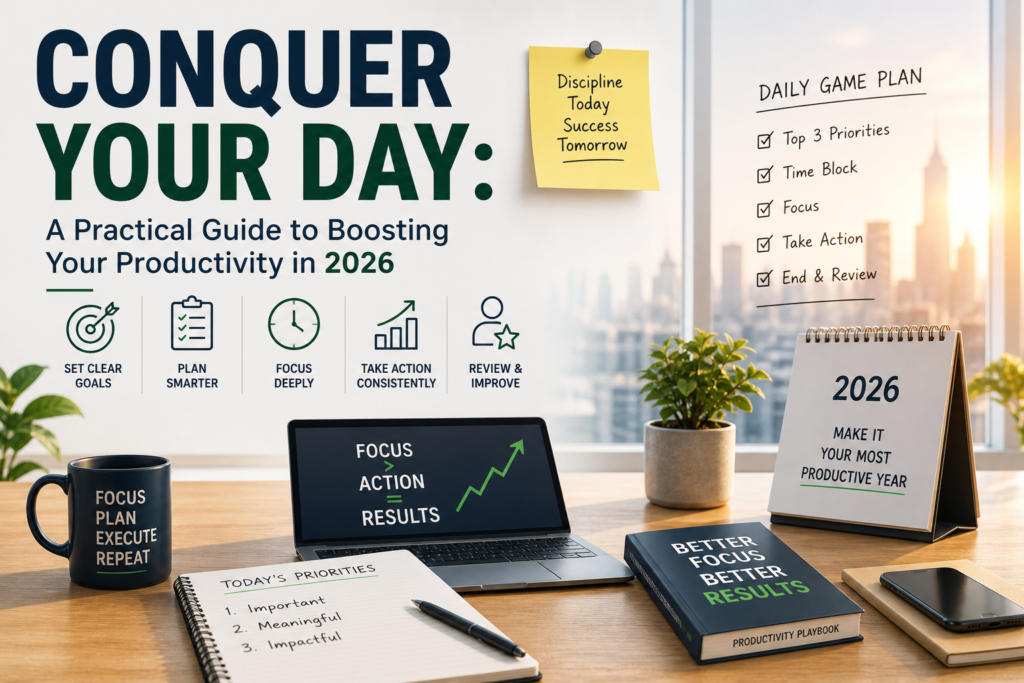
Let’s be honest: in the crazy world we live in, just getting through the day can feel like a win. You’re juggling work, life, maybe family, and a constant stream of notifications. It’s easy to feel overwhelmed, like you’re constantly putting out fires instead of making real progress on what matters. Sound familiar? I get it. For years, I was stuck in that cycle of feeling busy but not truly productive. It wasn’t until I started to understand *how* to work, rather than just working harder, that things really started to change. This isn’t one of those “hustle harder” guides. We’re going to dive into practical, actionable steps you can take today to reclaim your time, reduce stress, and actually get important things done. We’ll cover everything from prioritizing tasks effectively to avoiding common productivity pitfalls, all while keeping the realities of the 2026 workplace in mind. Let’s get started.
Understanding the Productivity Problem
Before we jump into solutions, let’s talk about the problem. What’s really stopping you from being productive? It’s usually not a lack of effort. More often, it’s a combination of factors, including:
- Distractions: Emails, social media, endless meetings – they’re everywhere. These interruptions shatter your focus.
- Poor Prioritization: Trying to do everything at once means you end up doing nothing well.
- Lack of Planning: Going into your day without a clear plan is like setting sail without a map.
- Burnout: Working constantly without breaks leads to mental and physical exhaustion.
These issues create a cycle of inefficiency. You feel stressed, overwhelmed, and like you’re always playing catch-up. Breaking free from this cycle requires a new approach to how you work.
Step 1: Prioritize Like a Pro
The core of productivity is knowing what matters most. Trying to treat every task as equally important is a recipe for disaster. Here’s how to prioritize tasks effectively:
- Make a Master Task List: Write down *everything* you need to do. This clears your mind and gives you a complete overview.
- Assess Urgency and Importance: Use the Eisenhower Matrix (Urgent/Important) to categorize your tasks. This helps you decide what needs immediate attention and what can be scheduled for later.
- Do First (Urgent & Important): Handle these immediately. They’re your top priorities.
- Schedule (Important, Not Urgent): Allocate specific time blocks for these tasks. They contribute to your long-term goals.
- Delegate (Urgent, Not Important): See if you can offload these tasks to someone else.
- Eliminate (Not Urgent, Not Important): These are tasks you can drop completely.
- Set Realistic Deadlines: Break larger projects into smaller, manageable steps with their own deadlines. This makes the overall task less daunting and provides a sense of accomplishment as you go.
Common Mistake: Treating everything as a priority. If everything is important, nothing is.
Step 2: Time Blocking for Deep Work
Once you know what to prioritize, the next step is to structure your time. Time blocking is a game-changer. It involves allocating specific blocks of time in your calendar for particular tasks. Here’s how to do it effectively:
- Choose Your Deep Work Time: Identify your peak energy hours. Are you a morning person? Do you focus better in the afternoon? Schedule your most demanding tasks during these times.
- Block Out Distractions: Turn off notifications, close unnecessary tabs, and let your colleagues know you’re in a “focus zone”.
- Stick to the Schedule: Treat your time blocks like important meetings. Don’t let anything else intrude.
- Embrace the Pomodoro Technique: Work in focused bursts (e.g., 25 minutes) followed by short breaks (5 minutes). This can help you maintain concentration and prevent burnout.
Pro Tip: Schedule a 20-minute “Weekly Priorities Review” at the end of each week to assess your progress and plan for the next.
Common Mistake: Trying to cram too much into each time block. Be realistic about how long tasks take.
Step 3: Minimize Distractions
Distractions are productivity’s worst enemy. Here’s how to create a distraction-free environment:
- Create a Dedicated Workspace: If possible, designate a specific area for work. This helps your brain associate that space with focus.
- Silence Your Phone: Put your phone on “Do Not Disturb”. Seriously, do it.
- Close Unnecessary Tabs: Too many open tabs are a visual distraction and can lead to context switching.
- Use Website Blockers: If you find yourself constantly checking social media or news sites, use website blockers to limit access during work hours.
- Communicate Your Availability: Let colleagues know when you’re in a focus block and that you might not respond immediately to emails or messages.
Modern Relevance: The digital world throws a lot at us. It’s more important than ever to be deliberate about what you let in.
Common Mistake: Thinking you can multitask effectively. You can’t.
Step 4: Take Breaks (Yes, Really!)
It sounds counterintuitive, but taking regular breaks is crucial for sustained productivity. Breaks allow your mind to rest and recharge, preventing burnout.
- Short Breaks: Use the Pomodoro Technique to incorporate short breaks (5-10 minutes) every 25 minutes.
- Get Up and Move: Step away from your desk, stretch, walk around, or do some quick exercises.
- Step Away from Screens: Avoid checking email or social media during breaks. Give your eyes and mind a rest.
- Longer Breaks: Schedule longer breaks for lunch and other activities to fully recharge.
Pro Tip: Take strategic rest, not just breaks. Doing something that relaxes and revitalizes you.
Common Mistake: Skimping on breaks or using them to do more work. Breaks are for disconnecting.
Step 5: Embrace Systems, Not Just Habits
Building good habits is important, but systems take it a step further. A system is a repeatable process that makes it easier to achieve your goals. Here’s how to build them:
- Create Templates: Develop templates for common tasks like email responses, meeting agendas, or project reports. This saves time and reduces mental effort.
- Automate Repetitive Tasks: Use tools like Zapier or IFTTT to automate repetitive tasks.
- Document Your Processes: Write down your workflows so you can easily replicate them and train others.
- Review and Refine: Regularly review your systems to identify areas for improvement.
Pro Tip: Implementing systems can improve efficiency across teams.
Common Mistake: Trying to memorize everything. Systems take the burden off your memory and allow you to focus on the work itself.
Step 6: Prioritize Your Energy
Productivity isn’t just about time; it’s about energy. When you’re running on empty, your performance suffers.
- Get Enough Sleep: Aim for 7-9 hours of quality sleep each night. Sleep is the foundation of focus.
- Eat a Healthy Diet: Fuel your body with nutritious foods. Avoid sugar crashes.
- Stay Hydrated: Even mild dehydration can impair cognitive function.
- Exercise Regularly: Physical activity boosts blood flow to the brain and improves focus.
- Manage Stress: Practice mindfulness, meditation, or other stress-reducing techniques.
- Schedule Around Your Energy Levels: Do your most demanding work when you’re most alert. For example,
Modern Relevance: Prioritizing your well-being isn’t selfish; it’s essential for long-term productivity and fulfillment.
Common Mistake: Pushing through exhaustion. This leads to burnout and decreased output.
Step 7: Learn to Say “No”
This is where the magic happens. Every time you say “yes” to something unimportant, you’re saying “no” to your real priorities.
- Evaluate Every Request: Before agreeing to something, ask yourself if it aligns with your goals and priorities.
- Politely Decline: It’s okay to say no. You can use phrases like, “I’m currently focused on [priority], but I’ll be happy to help later.”
- Set Boundaries: Clearly communicate your availability. Don’t feel obligated to respond to emails or messages outside of work hours.
- Dare to Decline: Projects that don’t align with your priorities should be declined.
Pro Tip: 10 minutes of planning can save you an hour of productivity.
Common Mistake: Saying yes to everything out of a sense of obligation.
Frequently Asked Questions (FAQ)
Here are some of the questions I often hear when people are trying to improve their productivity:
Q: I feel like I’m always busy, but never get anything done. What am I doing wrong?
A: You’re likely focusing on urgent tasks instead of important ones. Prioritize ruthlessly and focus on deep work. Review the Eisenhower Matrix and build your day around your energy levels.
Q: How do I stop getting distracted by social media?
A: Use website blockers, turn off notifications, and create a designated workspace. Treat it like a challenge.
Q: I’m a procrastinator. How can I stop putting things off?
A: Break large tasks into smaller steps, set realistic deadlines, and use the Pomodoro Technique. Reward yourself for completing tasks, not just for starting them.
Q: I’m overwhelmed by my to-do list. What should I do?
A: Create a master task list, prioritize tasks using the Eisenhower Matrix, and focus on the top 1-3 most important tasks each day.
Q: How can I get more done in less time?
A: Prioritize tasks, time block your day, eliminate distractions, and focus on one thing at a time. It’s about working smarter, not harder.
Q: Is multitasking ever a good idea?
A: Generally, no. Multitasking reduces efficiency and increases errors. Focus on one task at a time.
Q: How do I deal with constant interruptions?
A: Set clear boundaries, let colleagues know when you are in a focus block, and schedule time for interruptions.
Q: How do I stay motivated when I’m working on something I don’t enjoy?
A: Break the task into smaller, more manageable steps. Reward yourself for completing each step. Focus on the end result and the value it brings.
Conclusion
Improving your productivity isn’t about becoming a superhuman. It’s about making smart choices, creating systems, and focusing on what truly matters. By implementing these strategies, you can take control of your time, reduce stress, and achieve your goals more effectively.
Remember, it takes time and effort to change your habits. Be patient with yourself, celebrate your progress, and keep refining your approach. You’ve got this.
If you’re looking for more actionable tips on productivity, check out Guidebloom. You can also read more about why following your passion might be the worst career advice you ever get with The Unspoken Truth: Why Following Your Passion Might Be the Worst Career Advice You Ever Get.